










Low energy consumption
E-paper displays consume virtually no power when in a static state. Energy is used solely to refresh the screen content. As a result, battery-powered models can operate entirely independently for up to a year.

E-paper displays consume virtually no power when in a static state. Energy is used solely to refresh the screen content. As a result, battery-powered models can operate entirely independently for up to a year.

Depending on how they are used, e-paper displays account for just one to two per cent of annual electricity costs compared with LCD displays. This results in significant cost savings compared with conventional digital signage solutions.

Thanks to their low energy consumption and environmental friendliness, e-paper displays offer businesses a sustainable alternative to paper posters. Some models are even made from recycled plastic and come in eco-friendly packaging.

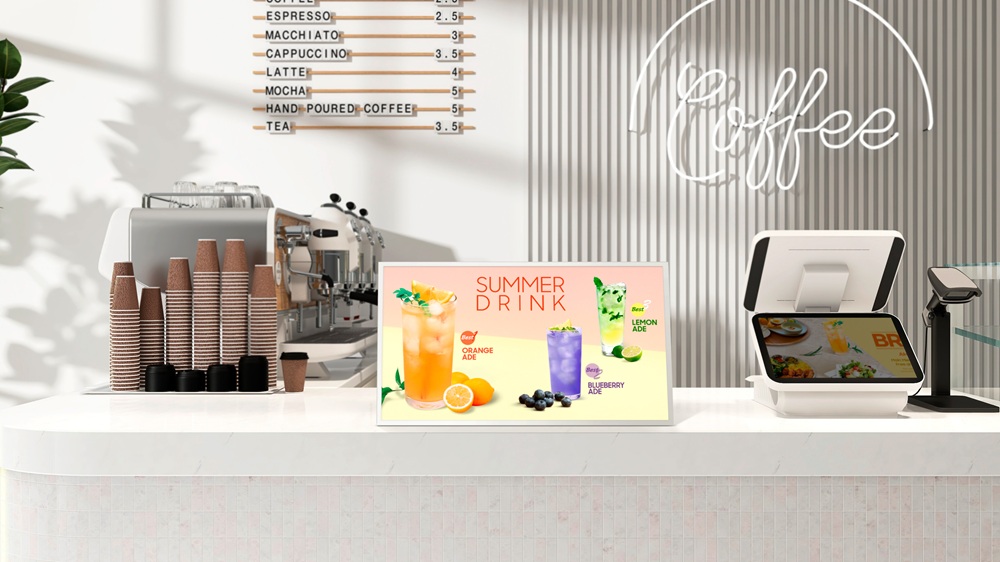
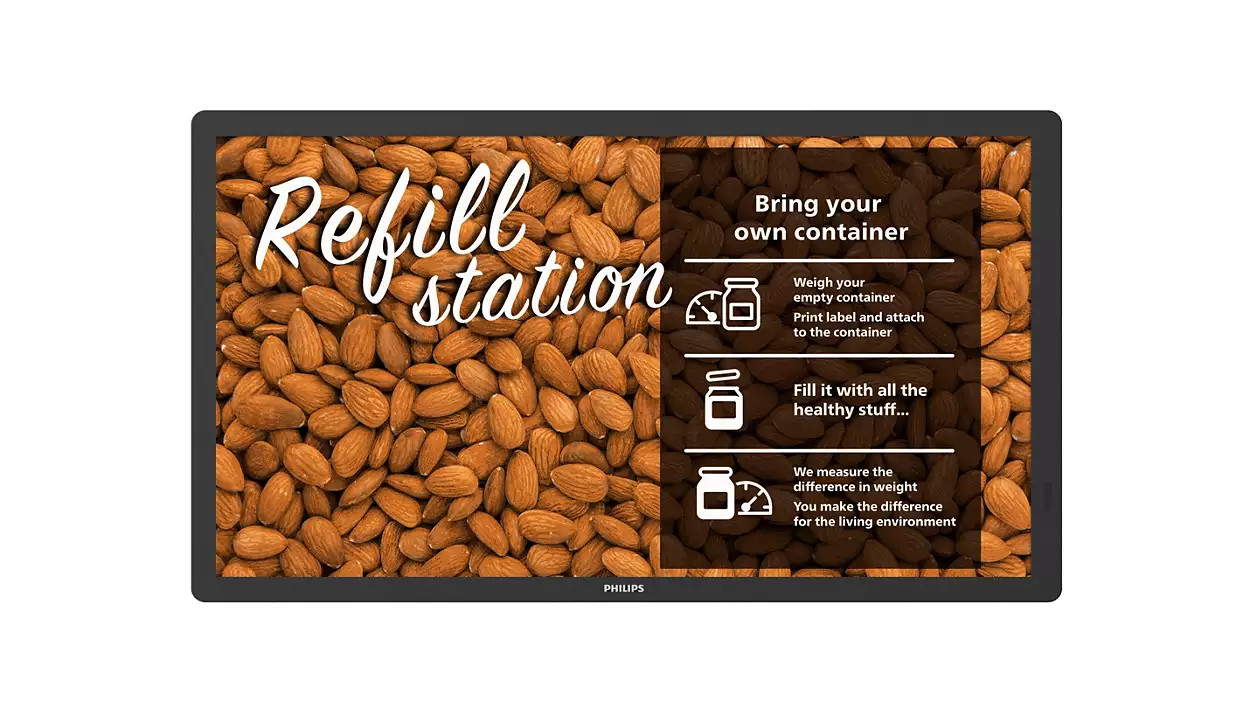
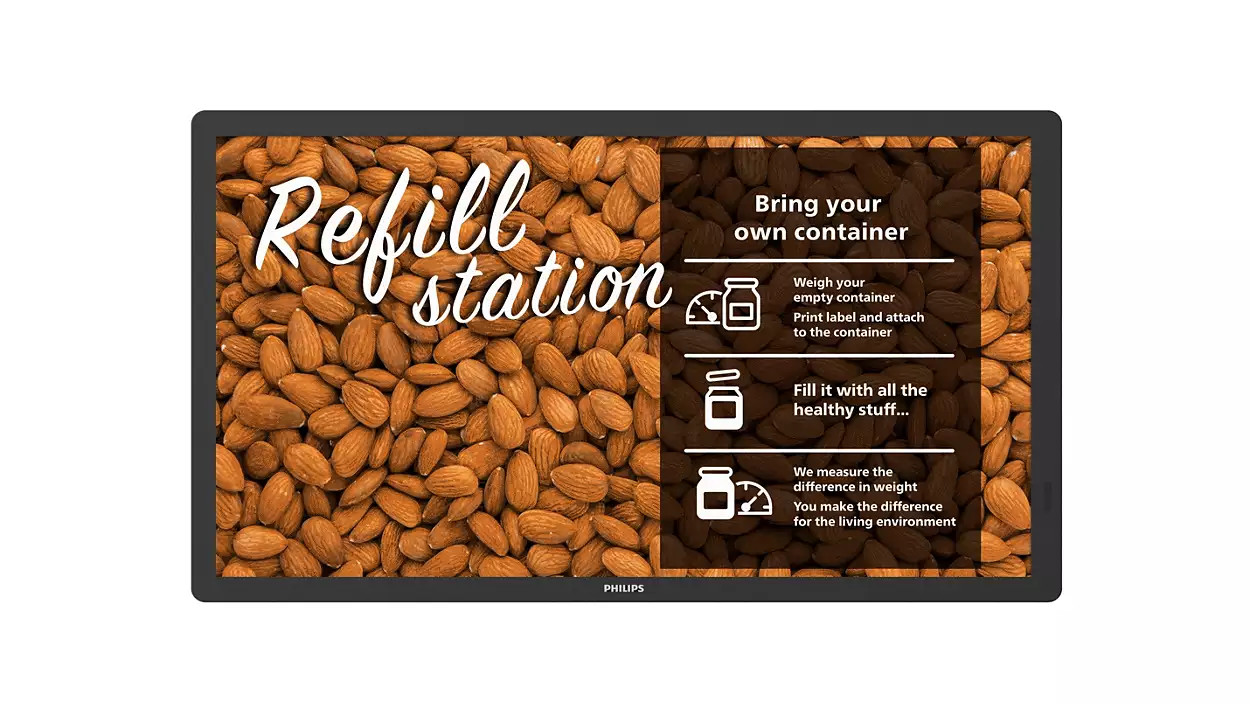
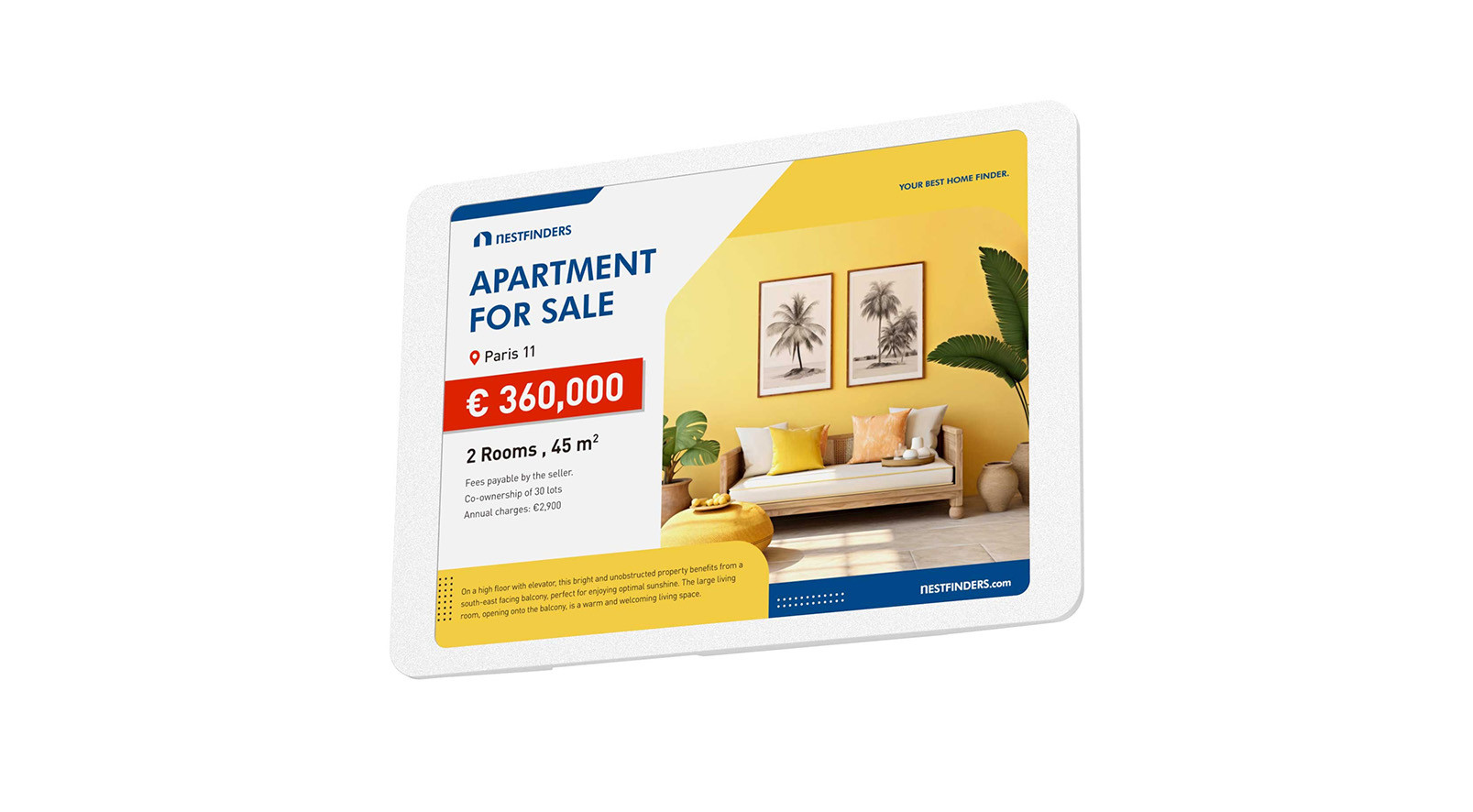
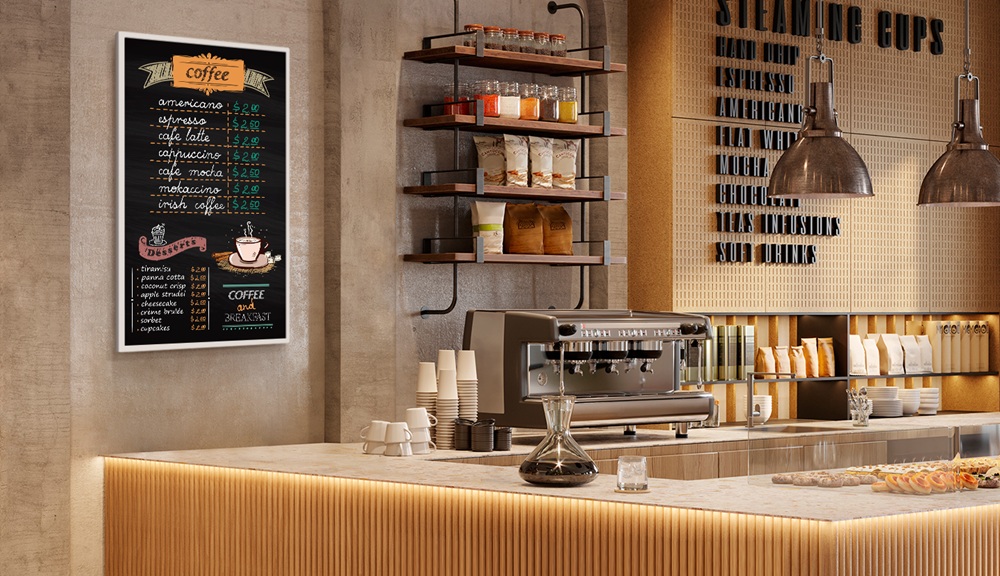
E-paper displays offer excellent readability, even in direct sunlight. They reflect ambient light in much the same way as paper, making them glare-free and ideal for use outdoors or in any setting where paper posters were previously used.

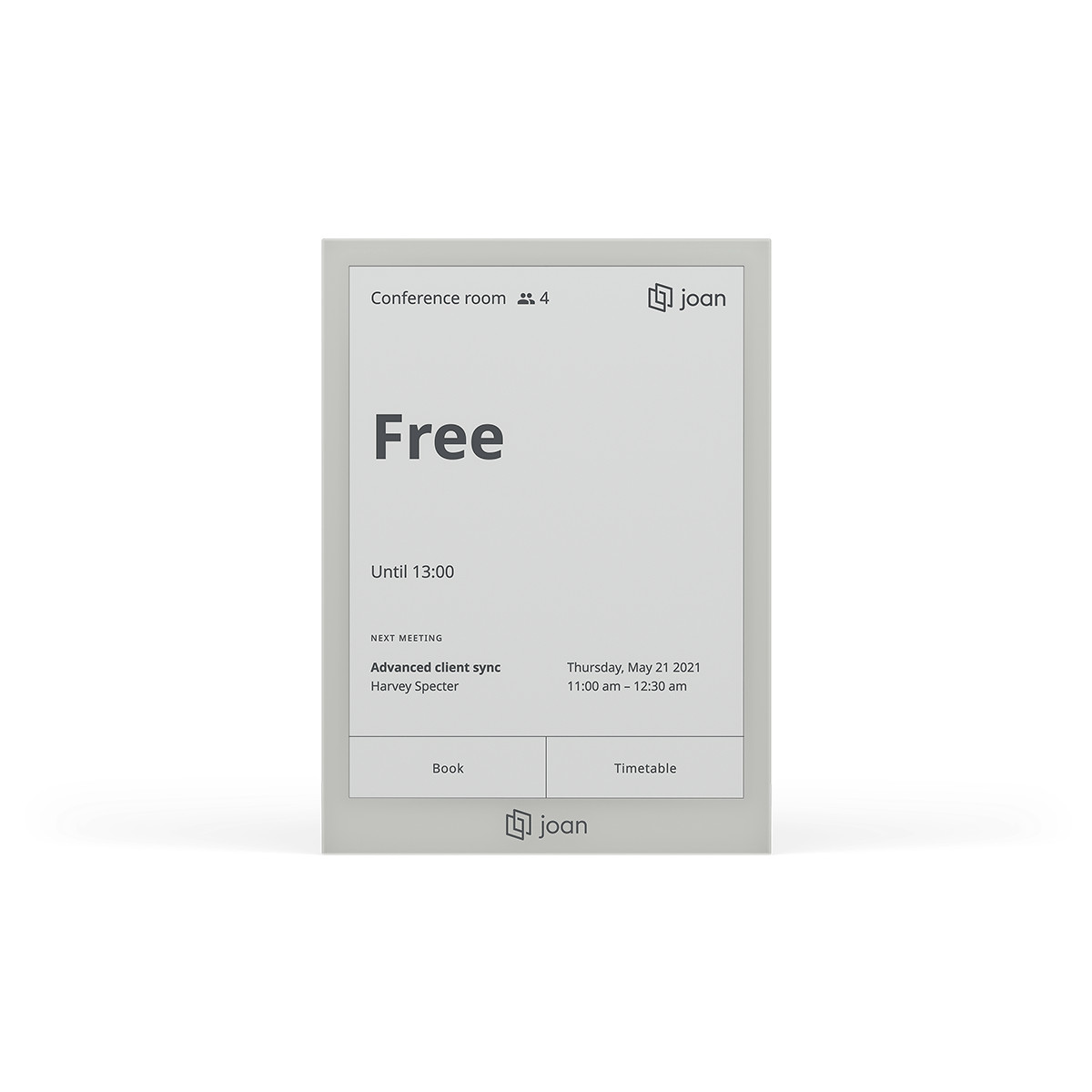
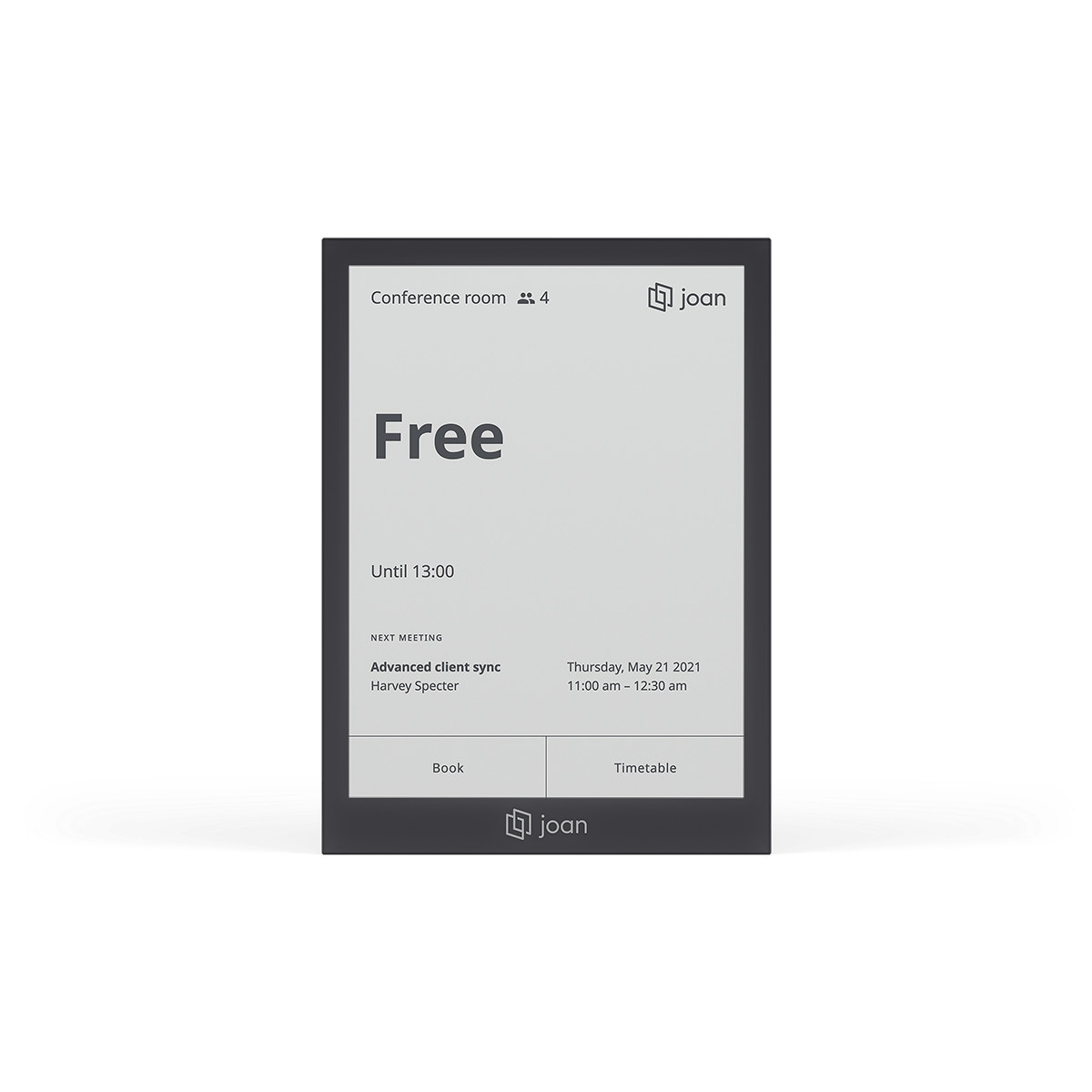
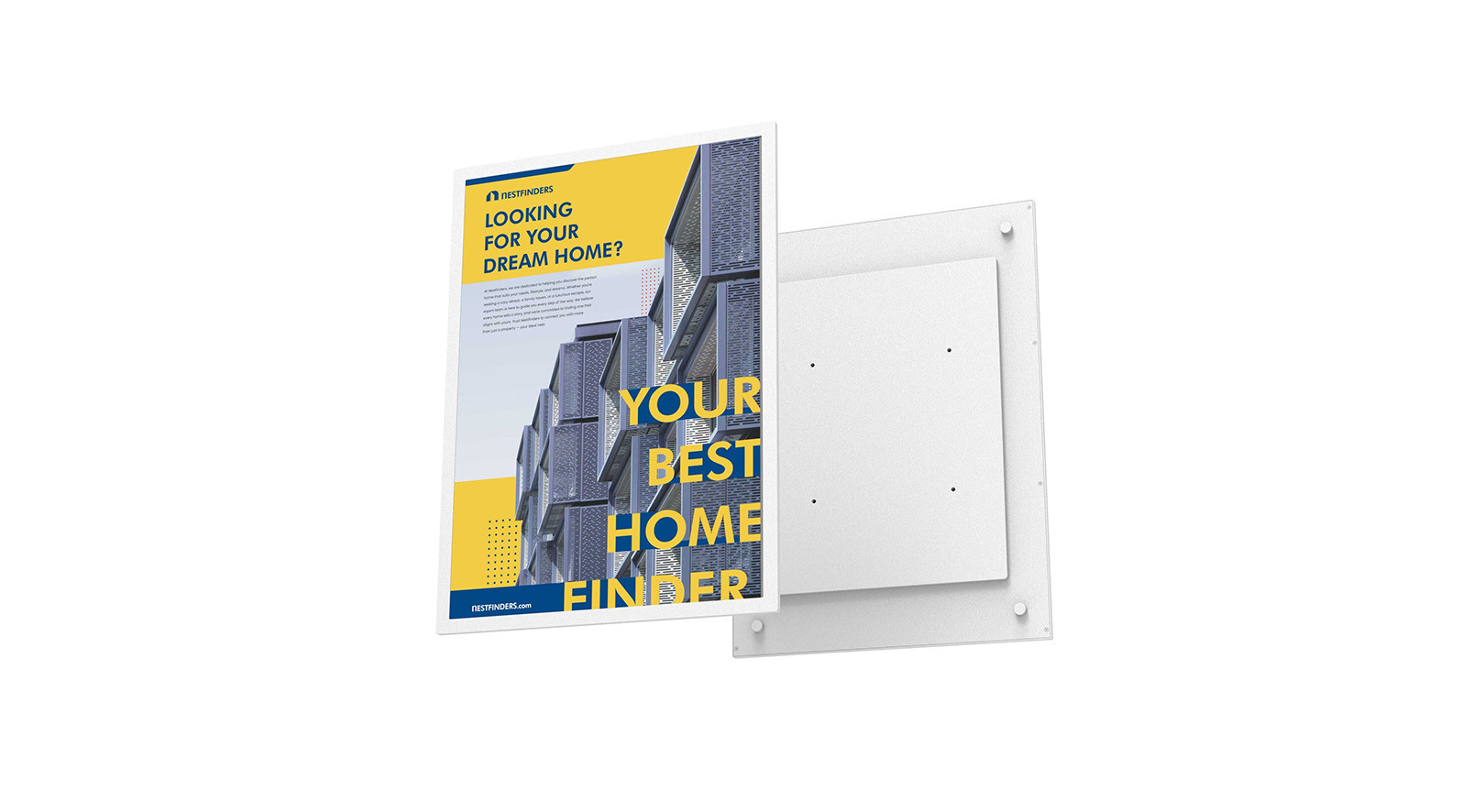
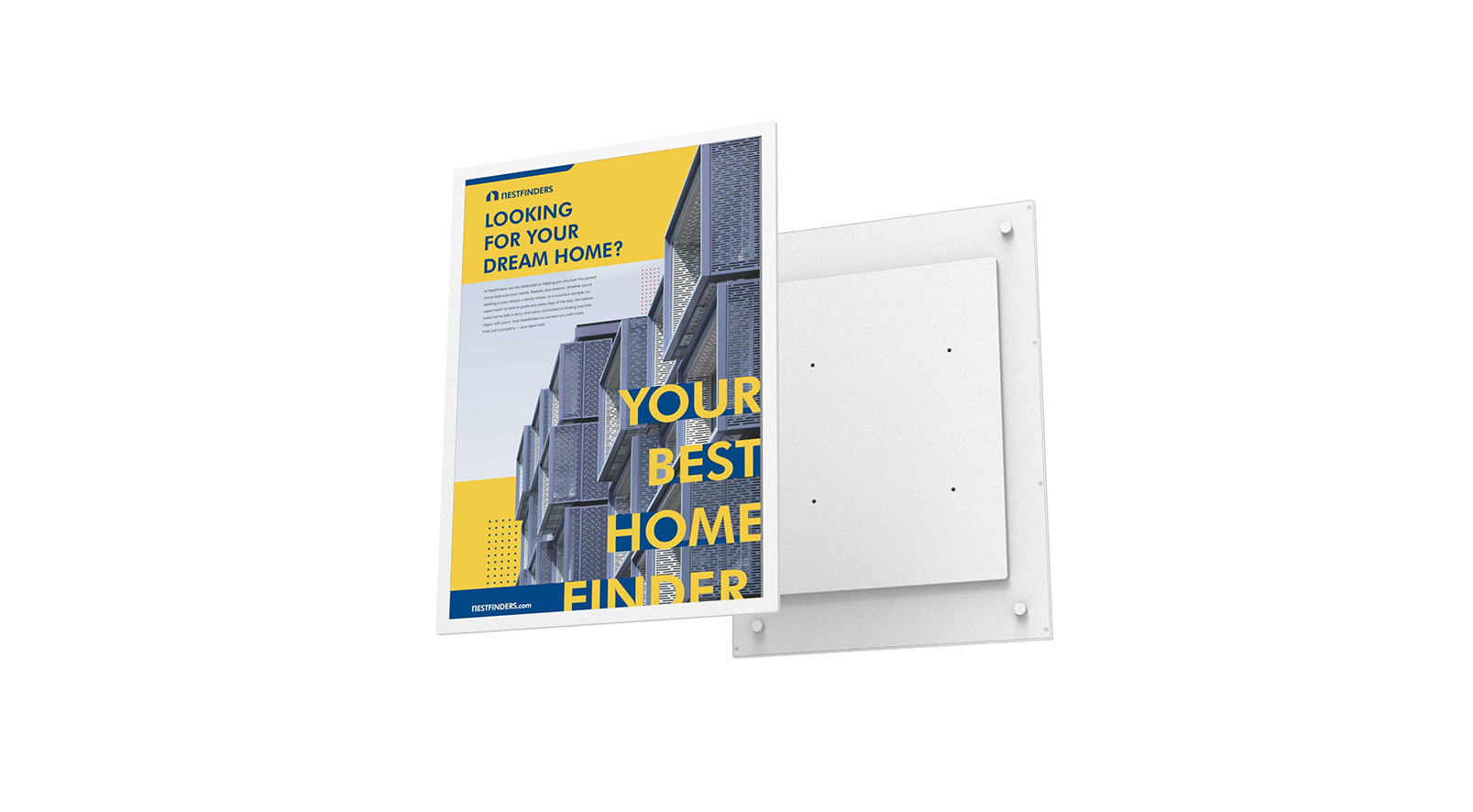
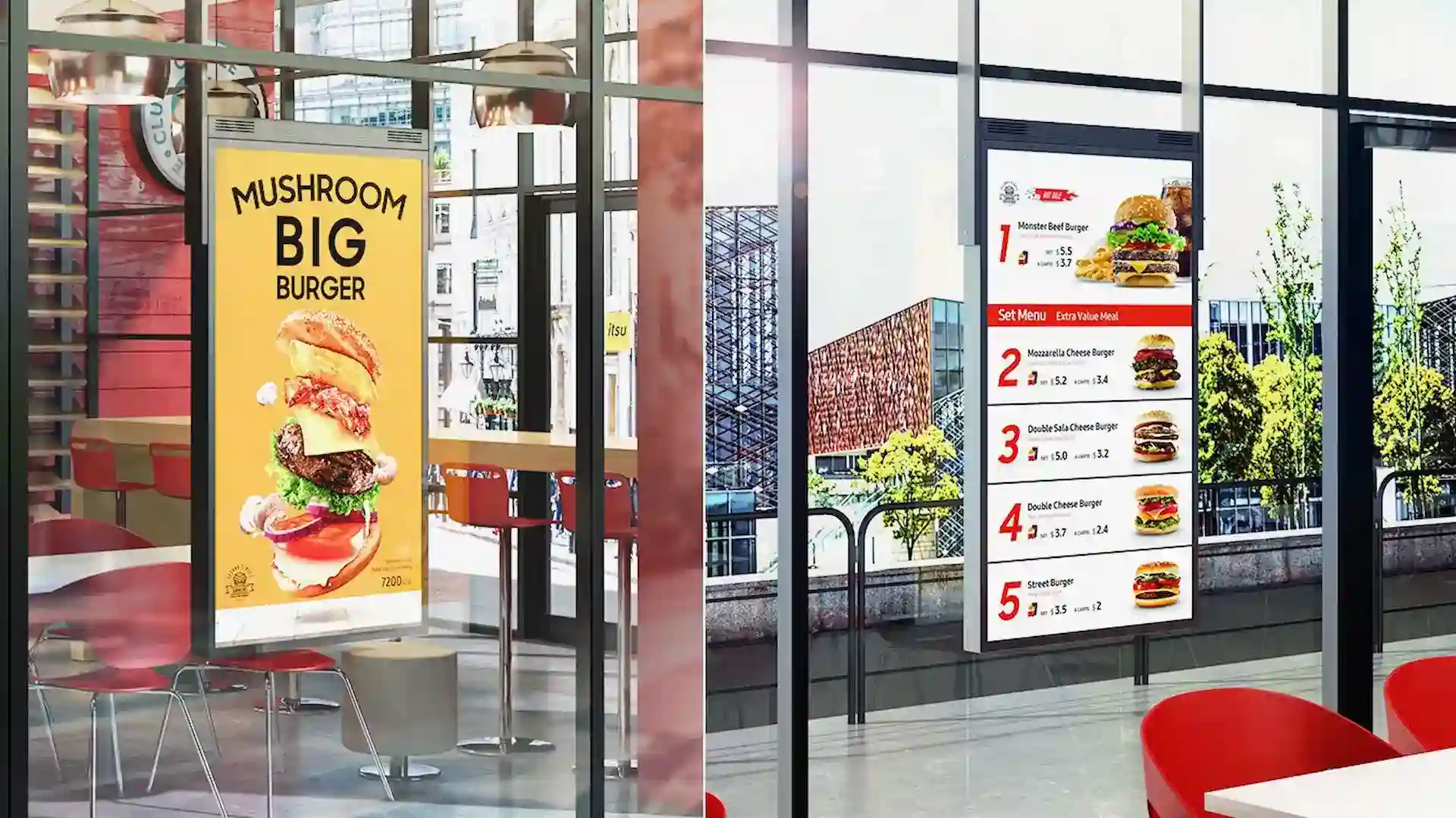
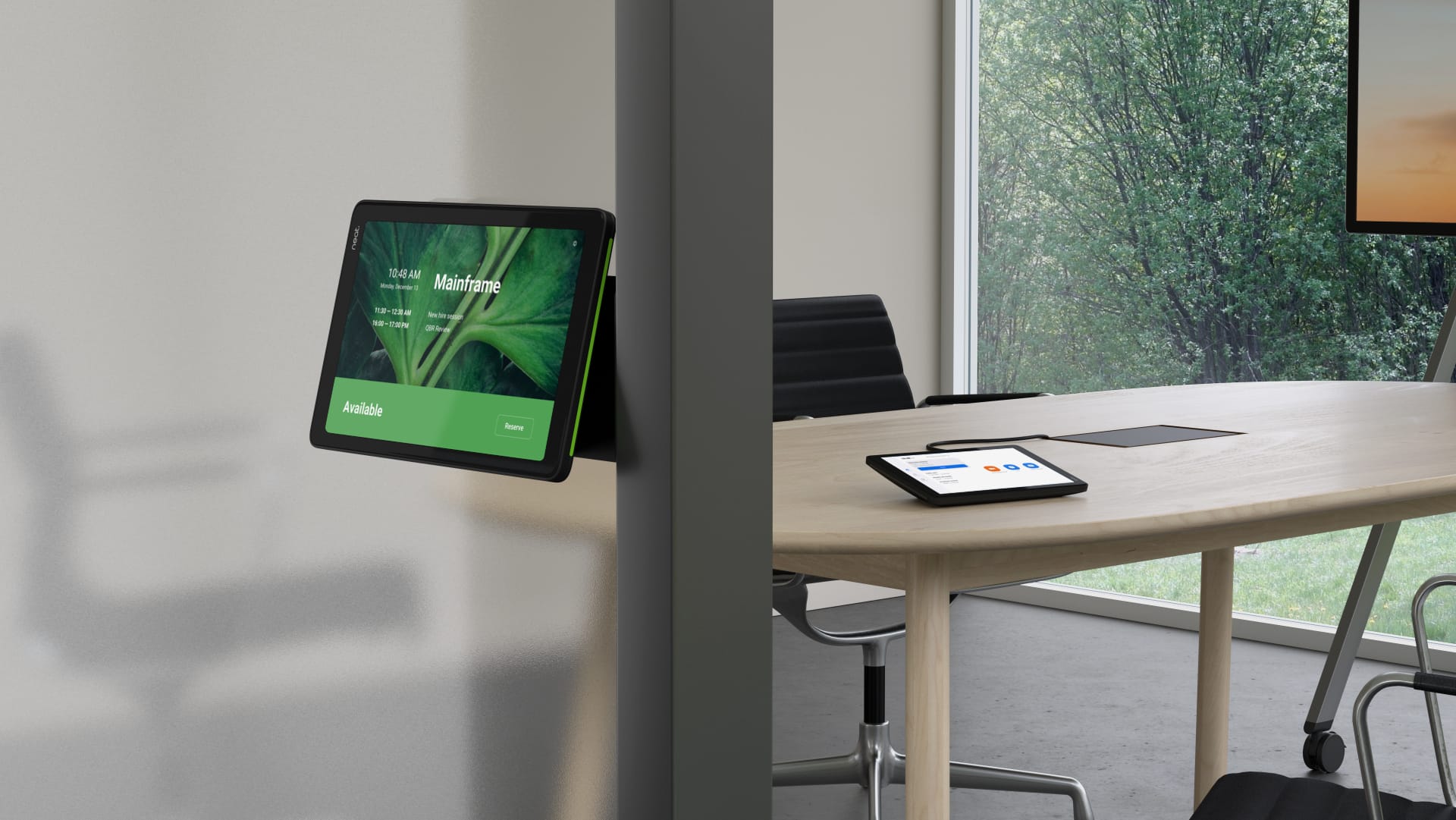
E-paper displays are available in a range of sizes. The selection ranges from small 13-inch displays to large 75-inch models. The displays are easy to install and can be mounted on walls, ceilings or tables. Some models are wireless and equipped with batteries, which makes positioning them even easier.

The content displayed on e-paper displays can be easily managed and updated using content management systems such as Samsung VXT or dedicated apps. Many displays also offer functions for remote maintenance and scheduling.
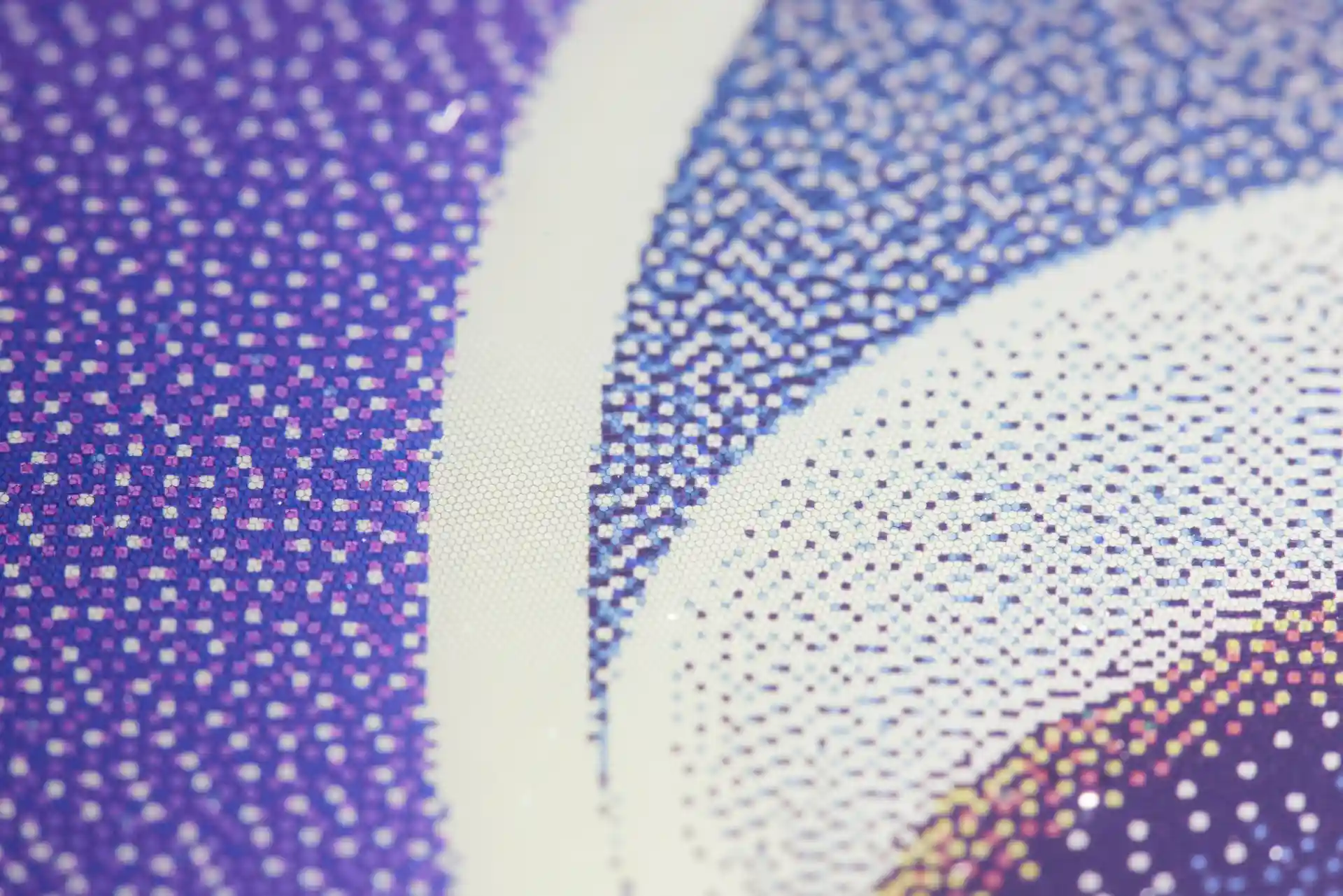
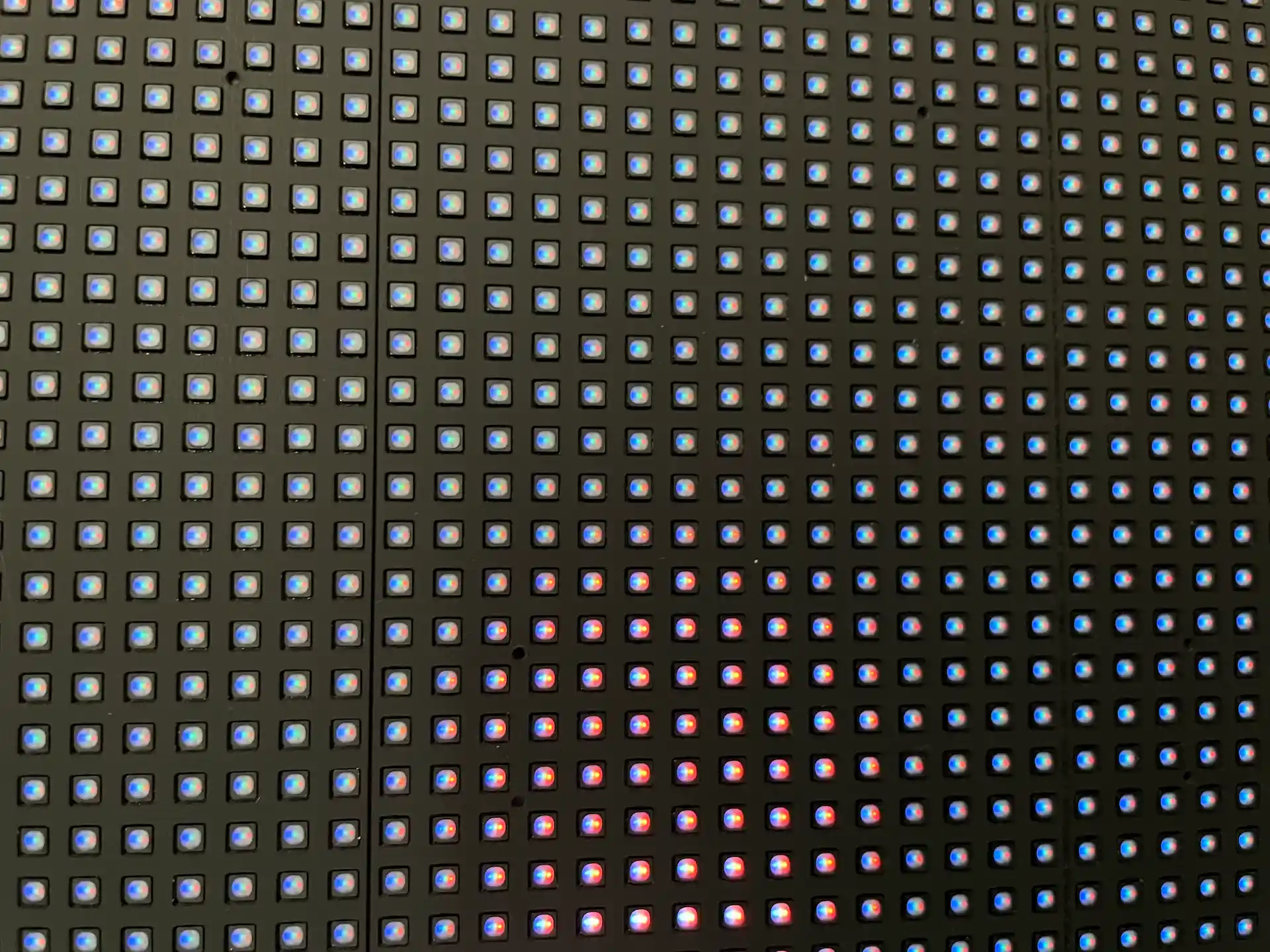

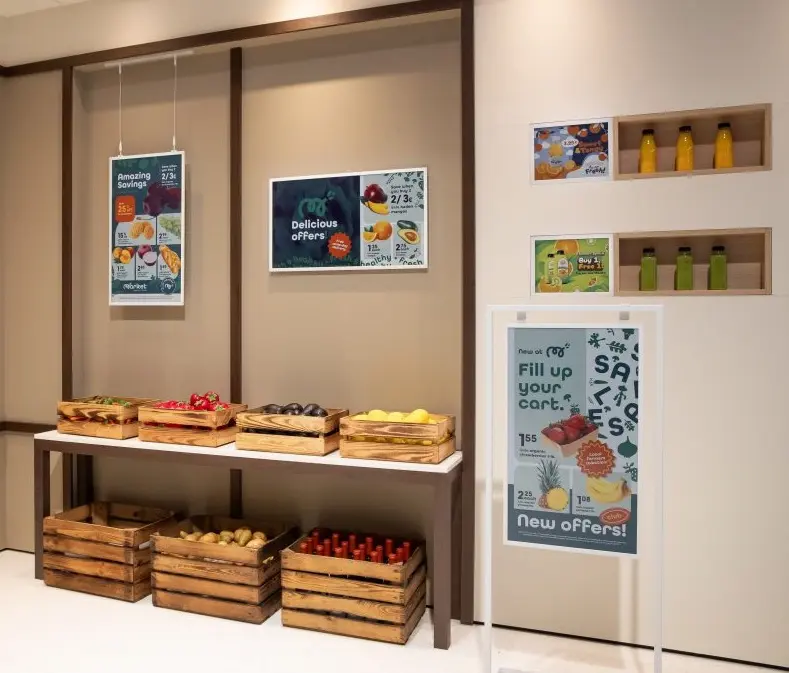
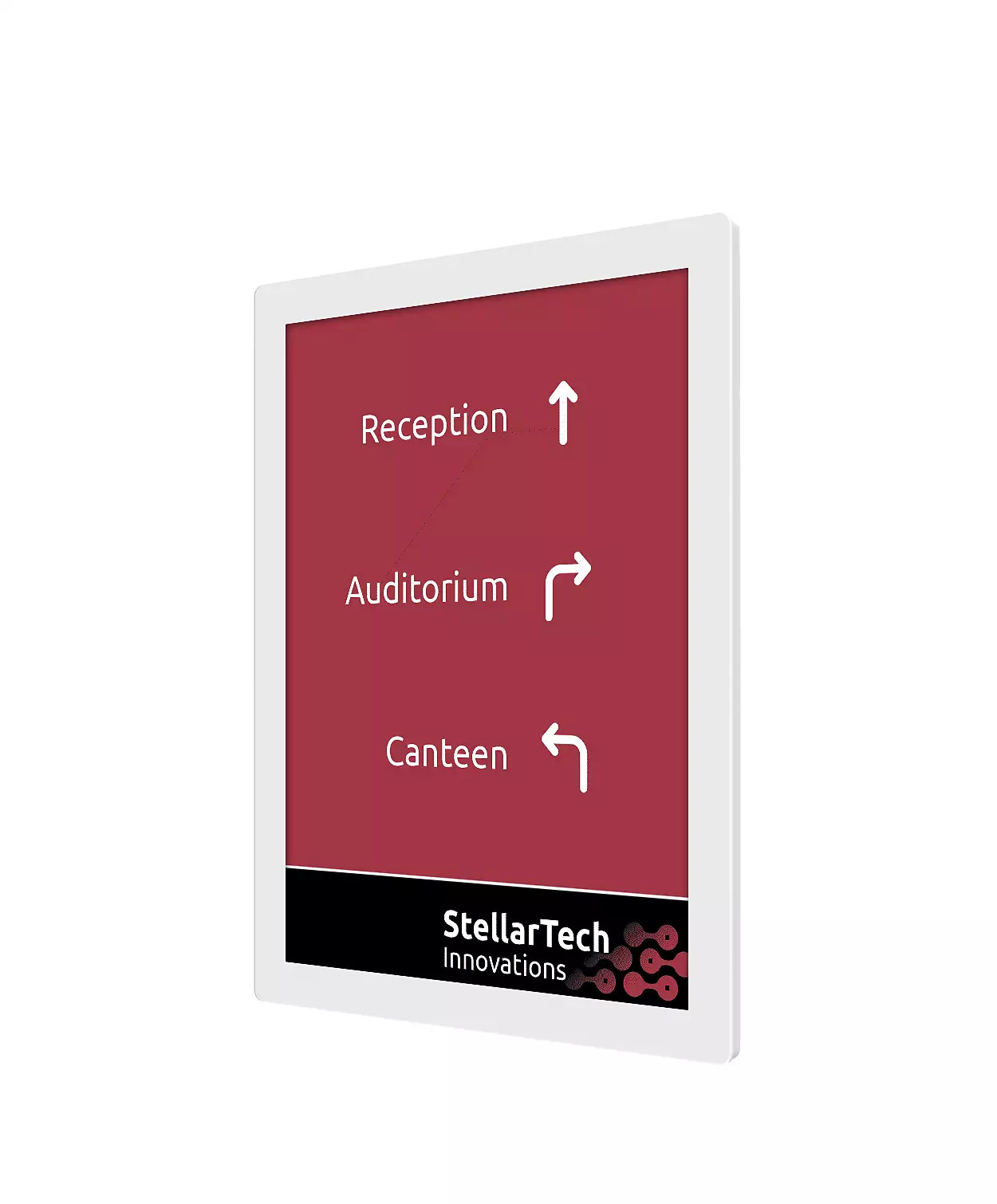
E-Ink Spectra technology is the standard for indoor use. This technology is crucial for the ability to display colour content with good visibility and high contrast. The colour gamut can encompass up to 65,000 colours, with six colours (red, yellow, green, blue, white and black) capable of being displayed per pixel.
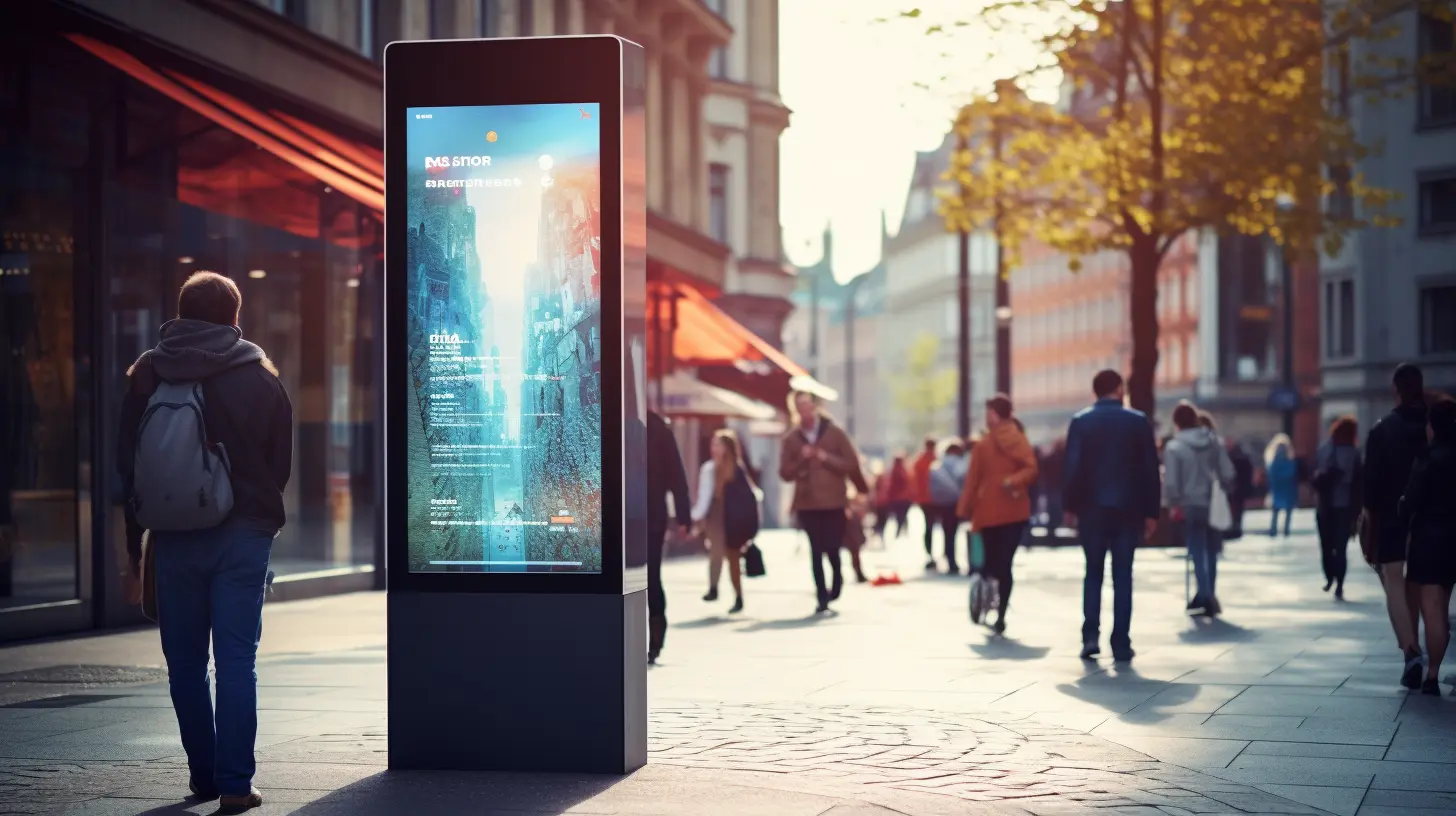
The outdoor e-paper utilises E-Ink Kaleido 3 technology, which is particularly well-suited to outdoor use. A key advantage is the wide operating temperature range of –15 °C to +65 °C, which allows it to be used in a variety of climatic conditions without the need for additional heating or cooling equipment. The dynamic colour reproduction, with 4,096 colours, enables content to be displayed in a variety of ways.

In this video, we clearly explain how e-paper displays work and what tangible benefits they offer as digital display boards.
Have a look and learn all the information you need in just a few minutes – perfectly tailored to your business!
All calculated values are intended solely for orientation and illustration. They do not represent a guaranteed minimum runtime. The values shown here are specific to the models EM32DX-A and EM13DX from Samsung. They are not intended as a representative benchmark for E-Paper devices from other manufacturers or in other sizes. Battery runtime is calculated on the basis of the power consumption measured by the manufacturer. Therefore, the actual battery runtime may vary depending on various factors such as network environment, content update frequency, battery service life, duration of user activity, image size, extreme heat or cold, etc. In addition, the battery runtime stated in the simulator may change due to changes to hardware components, firmware updates or changed environmental conditions during use. In the simulation, the duration of user activity, meaning the additional time during which the device is considered switched on due to manual operation, is included at approx. 1 minute. Automatic updates intended to prevent image burn-in are also included. Image size of the referenced content: 1.x MB. The electricity cost comparison compares a standard signage display with an E-Paper display. Power, electricity price and operating time can be freely adjusted; the default settings are 55 W, 35 p/kWh and 24 hours of operation per day. The E-Paper costs take into account the battery charges required in the respective period (battery capacity 17.71 Wh, including approx. 15% charging loss). The power consumption of individual displays can be found in the respective data sheets. The actual power consumption during operation may differ. All information and calculations are provided without guarantee.