
visunext Guide

Buying the best displays in 2026: Top devices reviewed

Models for classrooms, signage and more, recommended by the visunext experts

1meetingraum-visunext

visunext Guide

Buy the best displays of 2026: top models reviewed

Models for classrooms, signage and more, recommended by the visunext experts.

In this display guide, our experts have compiled a list of the best professional displays for various applications. With our rankings, you’ll always find the right display – whether for the office, the classroom, a videowall or a digital signage solution. At visunext, you’ll find all the information you need to easily compare displays. Can’t find the right display yet? Our experts are happy to provide you with personalised consulting!

Content

Key display test results at a glance
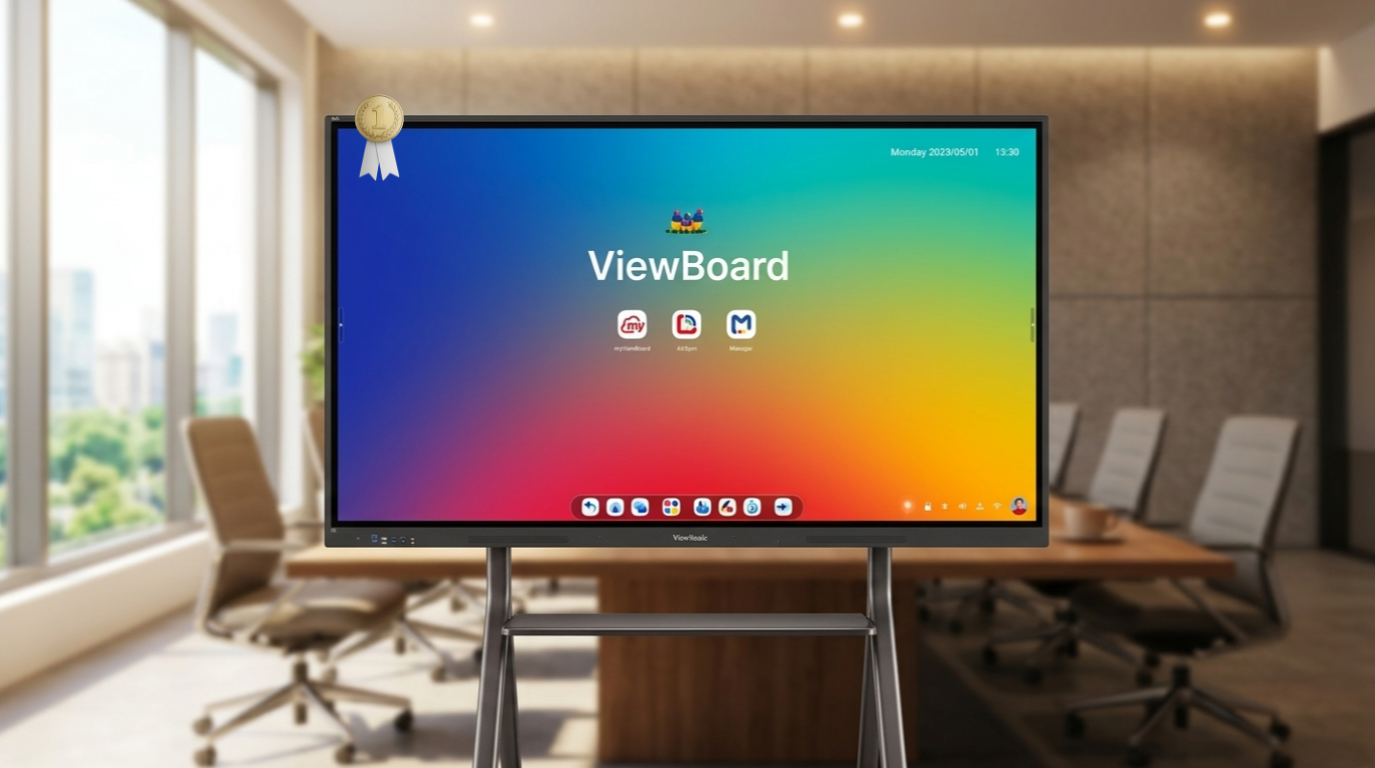
Looking for the right display? No problem! Our review highlights the clear winners and insider recommendations you need for business or educational institutions.

  • If you want to work interactively in a meeting room or classroom, the ViewSonic ViewBoard IFP8633-G is the right choice thanks to its comprehensive software suite.
  • As a robust allrounder for digital signage applications, the Samsung QM55C is the best choice thanks to its 24/7 support.
  • For impressive videowall installations, the Samsung VH55C-R stands out with its almost invisible 0.88 mm bezel for a seamless image.

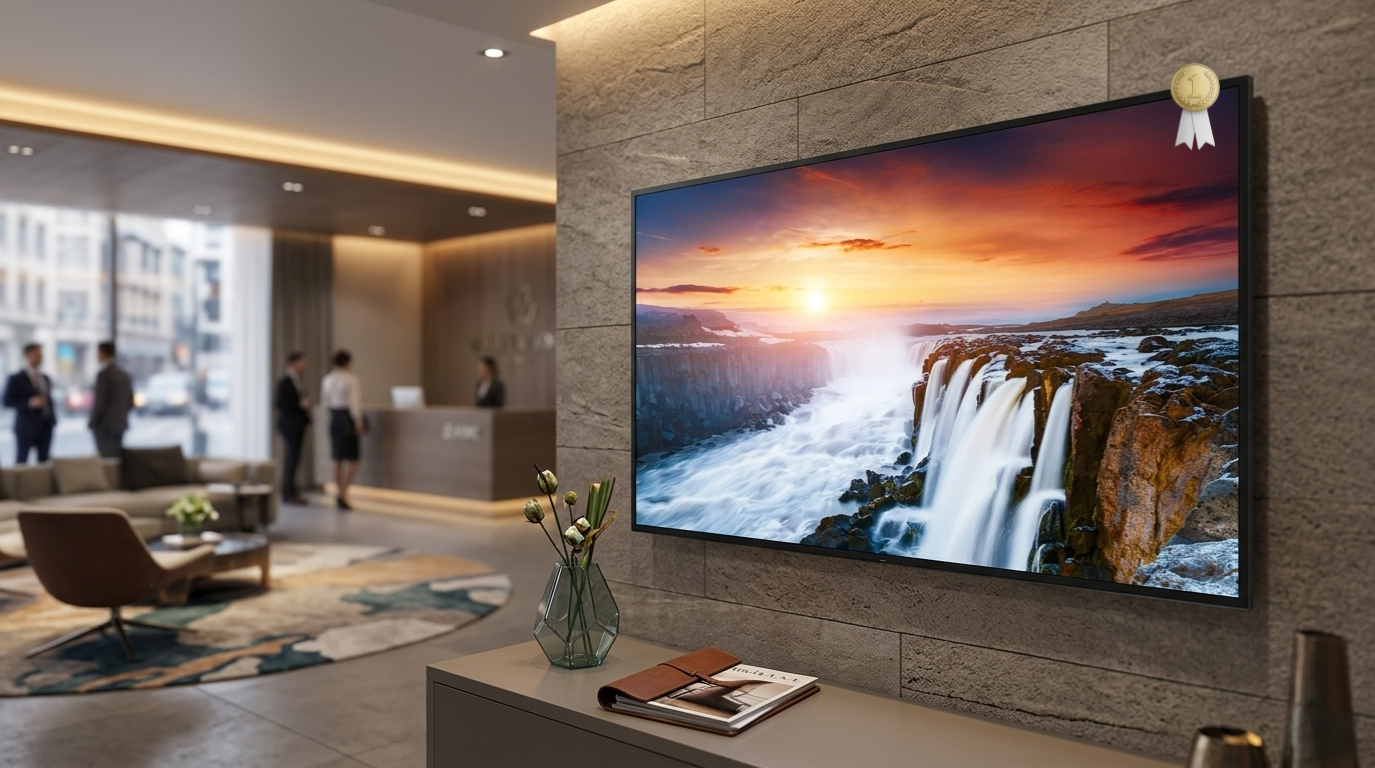
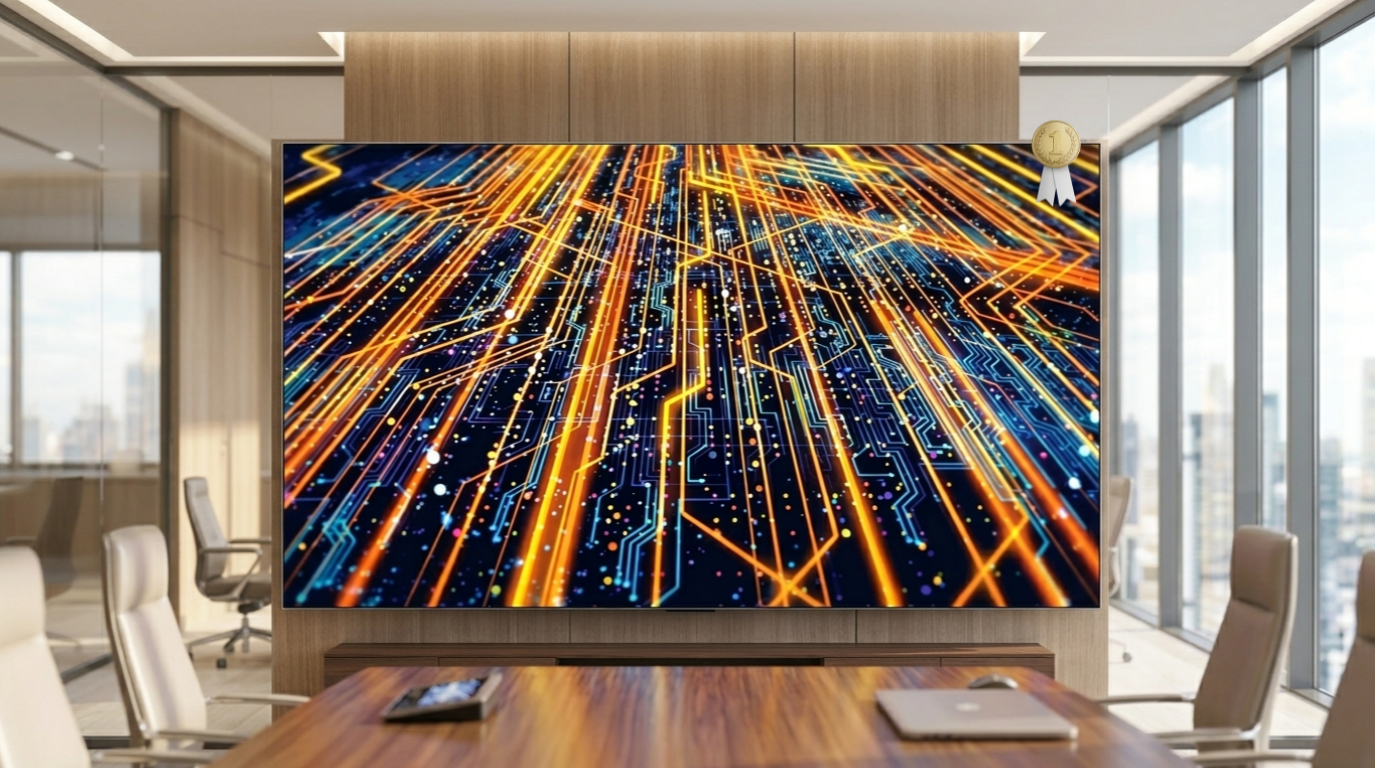
Our tip: As an alternative to traditional displays, all-in-one LED walls such as the Samsung Indoor All-in-One 130" LED Wall IAC are becoming increasingly popular – particularly for large conference rooms and lobbies.

The best interactive displays for meeting rooms in 2026

Interactive displays are no longer used merely as projection screens, but serve as central, collaborative platforms in educational institutions and businesses. The following factors are crucial for a future-proof investment:

  • Interaction and writing feel: Minimal touch input latency and a direct connection between the glass and the panel are crucial to keep the distance between the pen and the writing surface as small as possible.
  • Image quality and size: The screen size must suit the room. There are many displays available in various sizes. The larger the room and the more people involved, the larger the display should be. For most applications, 4K resolution is ideal.
  • Connectivity: In addition to connections such as HDMI and LAN, a USB-C port is also ideal for transferring content and directly powering connected laptops. Wireless connectivity options such as Miracast and AirPlay round off the package.
interaktive_displays_platz-1

1st place | Interactive displays

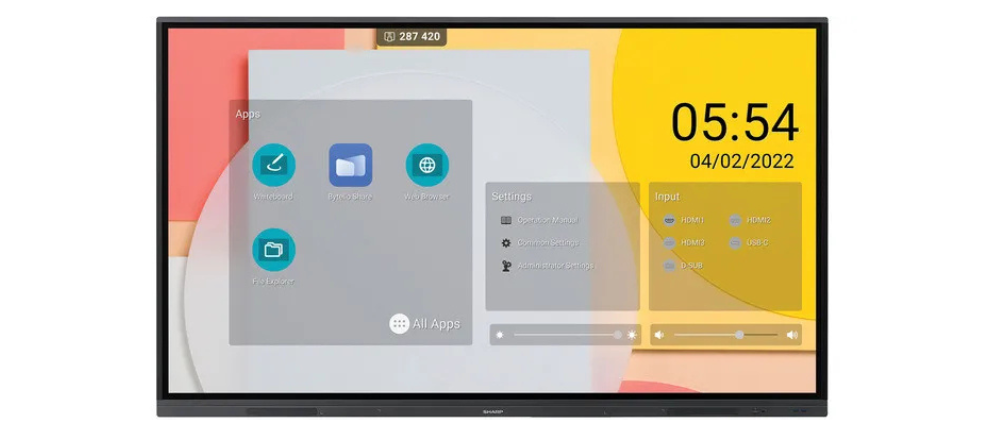
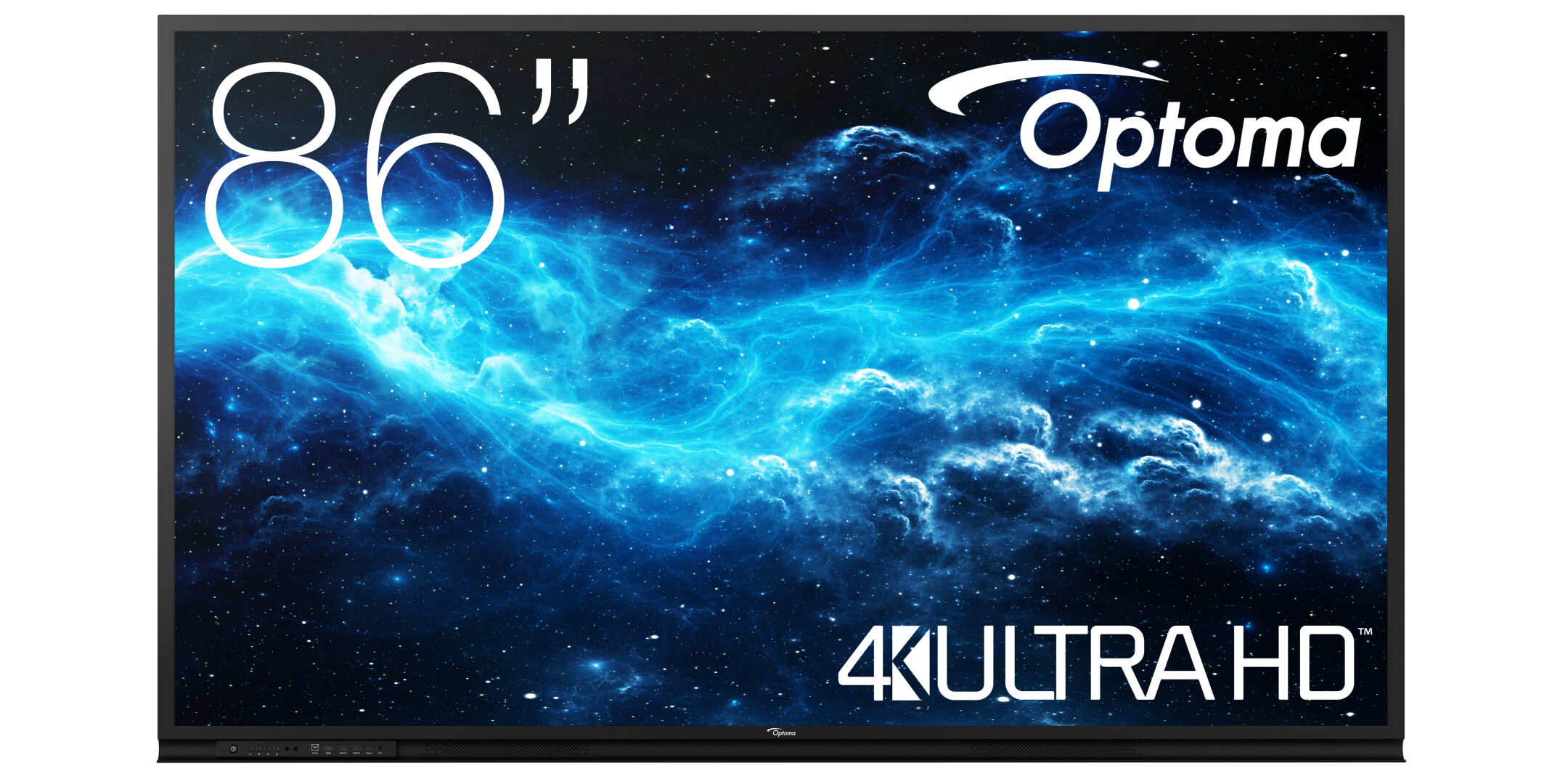
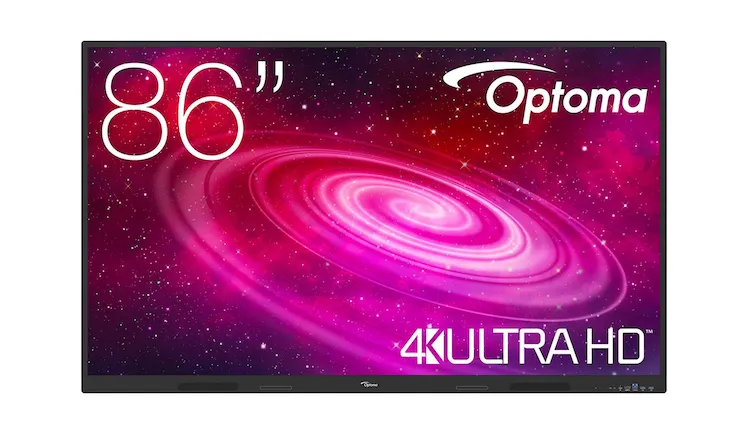
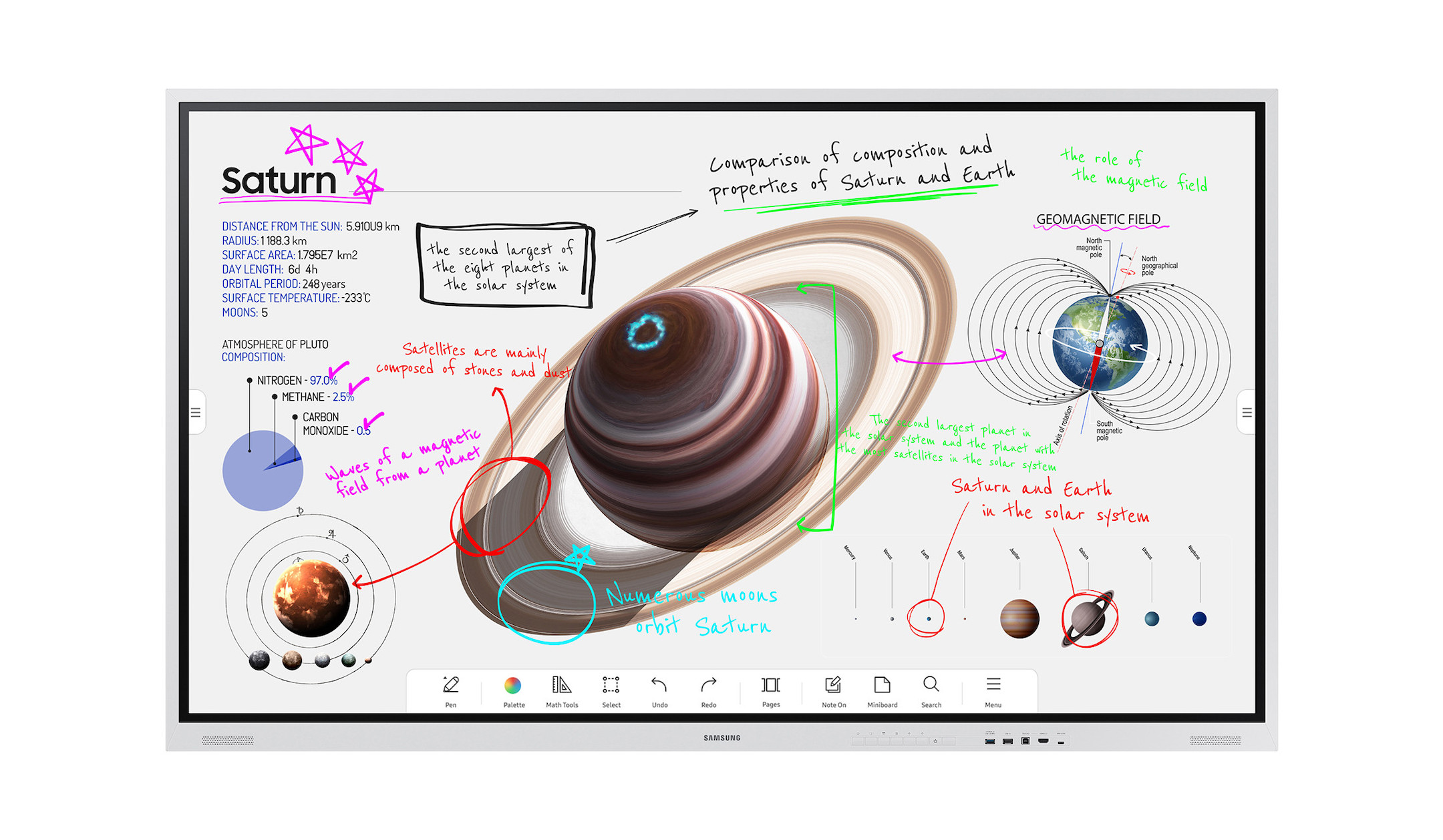
ViewSonic ViewBoard IFP8634

The ViewSonic ViewBoard IFP8634 takes first place in this test, as it places a clear focus on the needs of modern educational institutions whilst delivering a compelling overall package. The 86-inch display impresses with its razor-sharp 4K UHD resolution. The IPS panel technology and wide viewing angle of 178 degrees ensure that content remains clearly visible even from unfavourable positions in the classroom or meeting room. The luminance of 350 cd/m² and the anti-glare, tempered glass surface ensure excellent readability in bright environments. The display’s built-in zero-bonding technology also reduces glare and enhances colour brilliance. Combined with Ultra-Fine Touch technology, this results in a lag-free, paper-like writing experience. Thanks to 40-point multi-touch, several people can work on the display simultaneously.

At its heart is the pre-installed myViewBoard™ Suite, which includes tools such as a whiteboard, wireless casting and remote device management. The 8 GB RAM and 128 GB eMMC storage enable smooth multitasking and offer plenty of space for apps and teaching materials. The USB-C port on the front is a key convenience feature. It allows the transfer of video, audio, touch content and data whilst simultaneously charging the connected laptop. The ViewBoard IFP8634 outperforms all other models in this test, as it offers a combination of outstanding visual quality thanks to its IPS panel, ample storage and the sophisticated myViewBoard platform.

The best digital signage displays of 2026 for advertising and information

Digital signage displays form the backbone of modern visual communication in public spaces, whether in retail outlets, conference rooms or educational establishments. The key requirements for professional-grade equipment are as follows:

  • Operating hours: To ensure long-term use in demanding environments, a minimum operating time of 16 hours per day (16/7) is required, or ideally 24/7.
  • Visual performance: Display brightness should ideally be 500 cd/m² or higher. Anti-glare displays also ensure low-reflection presentations in bright environments.
  • Software platform: An integrated operating system is helpful for implementing simple remote management and content management functions independently and without additional software.
digital_signage_displays_platz-1

1st place | Digital signage displays

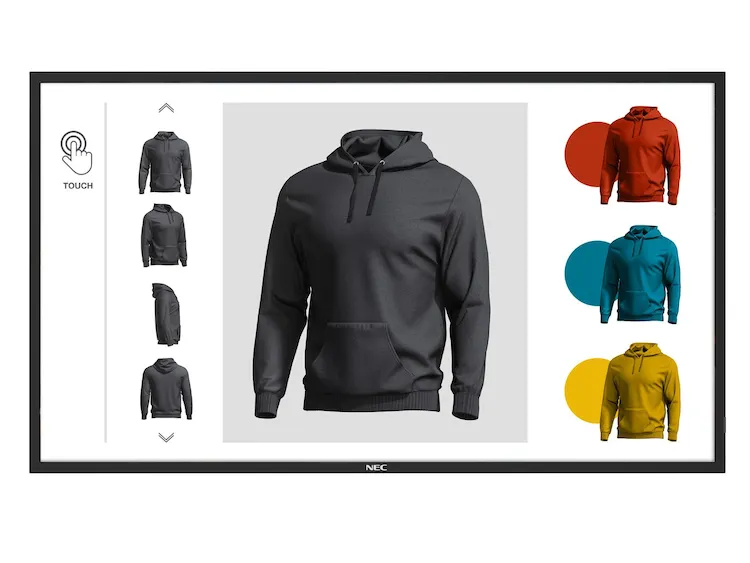
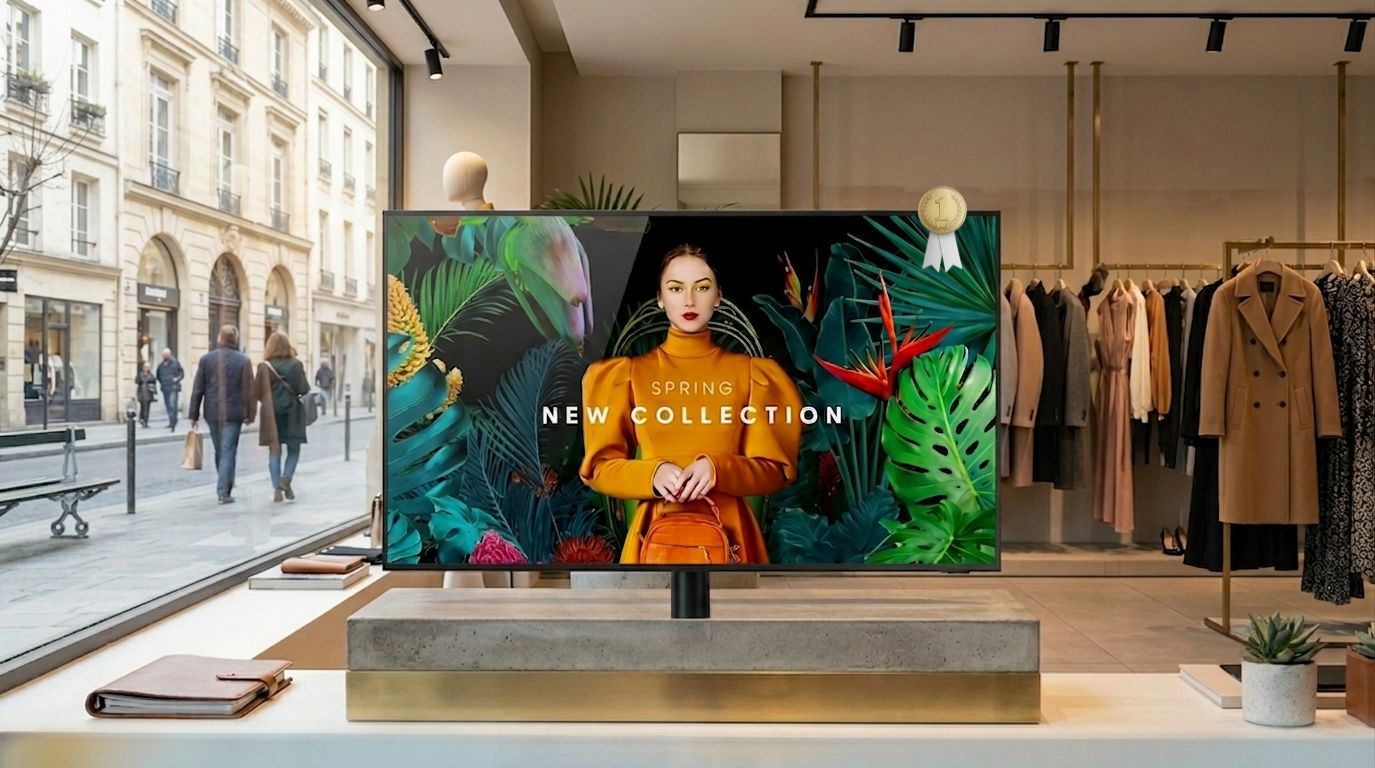
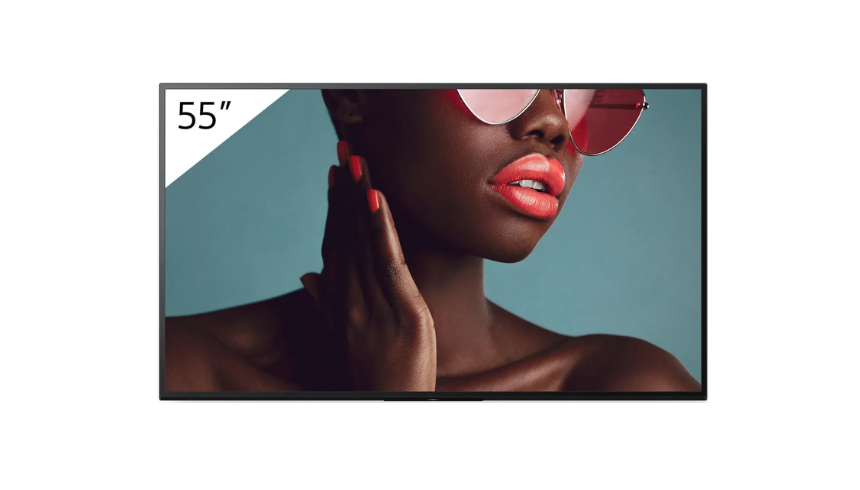
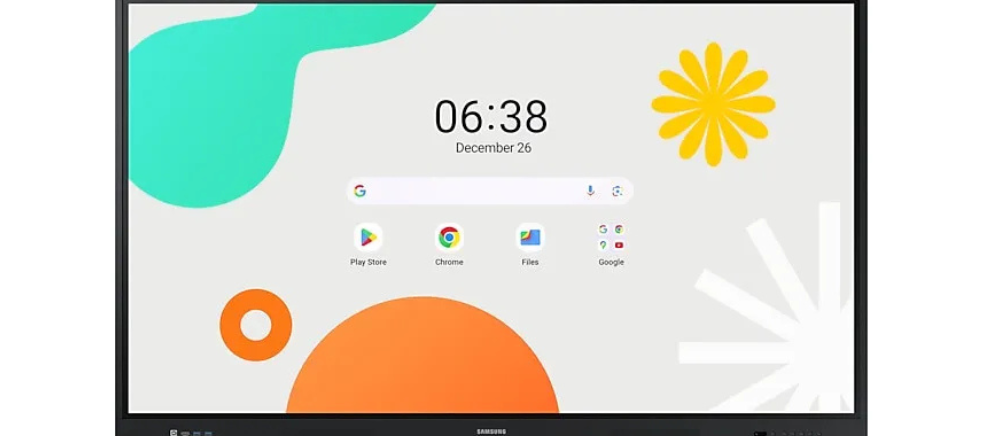
Samsung QM55C

In this test, the Samsung QM55C from the QMC series comes out on top. It is a professional allrounder and offers the best balance of performance and reliability for demanding digital signage applications. The key advantage over the QBC series (2nd place) is its suitability for bright environments. With a haze value of 25% and a brightness of 500 cd/m², the display has excellent anti-glare properties and remains clearly legible even in bright light.

Furthermore, the QM55C is designed for 24/7 continuous operation and is dust-protected to IP5x. Thanks to its ultra-slim depth of 28.5 mm, it can be flush-mounted. The 4K resolution and Dynamic Crystal Colour ensure a clear picture. Management via the Tizen 7.0 operating system and the integrated MagicINFO Player S10 is tried and tested. The QM55C is therefore the most robust choice for continuous use in retail environments or lobbies.

The best classroom displays for 2026 for interactive teaching

A classroom display serves as the central hub for digital teaching. The demands placed on these displays are correspondingly high: they must be robust, intuitive to use and bright enough for use in daylight. Specifically, the following specifications are crucial:

  • Software suite: Pre-installed apps, e.g. for whiteboarding, with additional tools such as geometry tools or directly accessible learning content, make the interactive display the ideal replacement for a blackboard.
  • Size and anti-glare: The larger the classroom and the more pupils attending, the larger the display should be. Additional, height-adjustable mounts ensure that all pupils can use the display. Anti-glare displays are ideal for ensuring good readability even in bright rooms.
  • Connectivity: In tablet-based classes in particular, wireless connectivity options such as Miracast and AirPlay are essential for sharing content and discussing it together. Wired connections to laptops or visualisers are possible via connections such as HDMI and USB-C.
klassenraum_displays_platz-1

1st place | Classroom displays

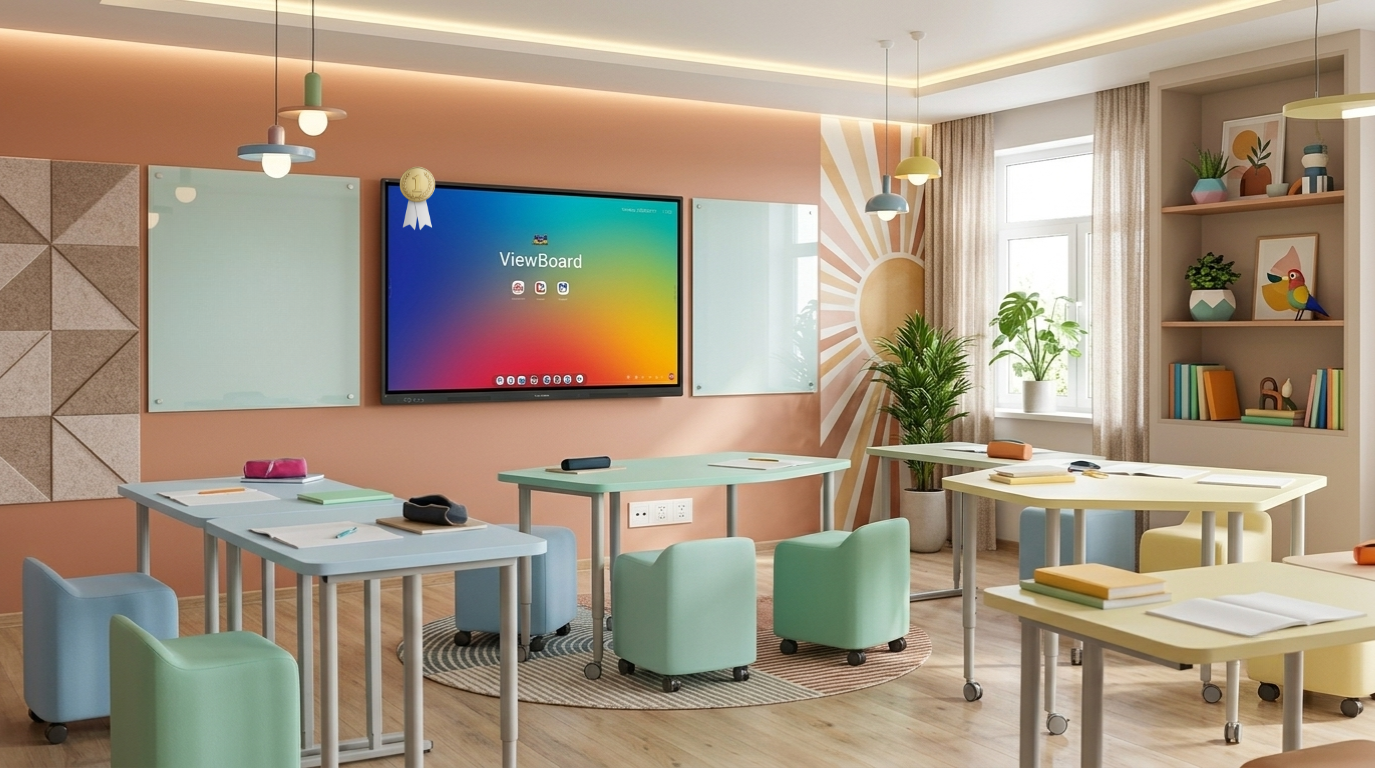
ViewSonic ViewBoard IFP8634

In a closely contested field, the test winner, the ViewSonic ViewBoard IFP8634, comes out on top as it offers the best overall package for interactive teaching. It combines excellent image and writing quality with the most powerful storage configuration in the test. With 4K resolution and a brightness of 350 cd/m² , the 86-inch display delivers a clear and bright image that performs impressively even in rooms that are not darkened. The key advantage for everyday use is the ‘Ultra Fine Touch Technology’ combined with ‘Zero Bonding’. This technology eliminates the air gap between the glass and the panel. This prevents parallax errors and enables a direct, paper-like writing experience. Here, the pen responds instantly and precisely.

The large 128 GB storage capacity is crucial in everyday school life for storing plenty of apps, extensive teaching materials and videos directly on the device, without constantly having to rely on external sources. With a 65 W USB-C connection on the front, connectivity is handled in a modern and practical way, allowing teachers to connect and charge laptops with just a single cable. The integrated Android operating system runs smoothly thanks to 8 GB of RAM and provides a stable platform for all common educational applications.

The best videowall displays for large display areas

A video wall transforms passive surfaces into dynamic communication platforms. Whether in retail, control rooms or prestigious lobbies, these criteria are crucial:

  • Bezel width: The most important criterion. The narrower the gap between the panels, the more seamless and uniform the entire video wall appears.
  • Brightness and contrast: Measured in cd/m², brightness determines visibility in bright rooms. Contrast defines how well the display can distinguish between deep blacks and bright pixels.
  • Depth: A shallow depth allows for a flat, elegant wall-mounted installation and simplifies installation in confined spaces.
videowall_displays_platz-1

1st place | Videowall displays

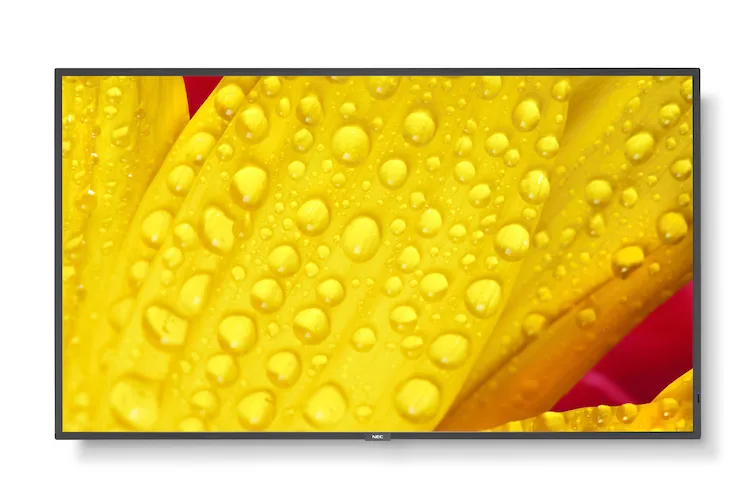
Samsung VH55C-R

The Samsung VH55C-R sets the benchmark for an optimal viewing experience, securing its place as the test winner. The key to this is its exceptionally thin bezel, measuring just 0.44 mm. When combined with the adjacent display, the gap between the displays is a mere 0.88 mm. For the viewer, the individual displays thus merge into a single, coherent image. What further qualifies the test winner for modern business environments is its depth of less than 70 mm. This design saves valuable space and allows for an elegant, wall-hugging installation.

With a brightness of 700 cd/m² and a non-glare panel, the display delivers clear content even in ambient light. Samsung enhances image quality with technologies such as Picture Enhancer Mode, which adjusts colour saturation and contrast, and Black Equaliser, which makes details in dark areas of the image more visible. The ‘Color Expert Pro Mobile’ solution offers installers a quick and easy method for the white balance calibration via a mobile phone.

The best all-in-one LED walls for modern businesses

LED walls are an exciting alternative to display installations and are becoming increasingly popular in many sectors. All-in-one LED walls are particularly appealing to businesses, as they combine all hardware components – from integrated controllers to speakers – into one package, thereby minimising installation effort. Key criteria include:

  • Image quality and brightness: A fine pixel pitch (the distance between pixels, measured in millimetres) ensures a sharp image even from close range. Brightness determines suitability for use in bright conference rooms or lobbies.
  • Installation effort: The ‘all-in-one’ factor. The LED modules, as well as the control unit and, where applicable, speakers and mounts, are included in the box and are designed so intelligently that installation is significantly quicker than with freely configurable LED walls.
all-in-one_led_walls_platz-1

1st place | All-in-one LED walls

Samsung Indoor LED all-in-one 130" LED wall IAC

The Samsung IAC 130-inch model has come out on top in our tests as the most impressive all-round package in the all-in-one LED wall category. It consistently delivers on its ‘all-in-one’ promise and revolutionises the way large-screen solutions are managed in business environments. Thanks to innovative Quick-Build technology , installation takes around two hours: simply dock the back panels, hang four modules – and you ’re done. All essential components, from the integrated control box to wall mounts, decorative frames and speakers, are included in the box. There is no need for time-consuming configuration.

With a fine pixel pitch of 1.5 mm and Full HD resolution of 1,920 × 1,080 pixels, the huge display delivers a brilliant picture. A static contrast ratio of 6,000:1 ensures deep blacks, whilst the brightness of 500 nits (peak values up to 1,000 nits) and LED HDR guarantee captivating images. The operating system is Tizen 6.5, which makes smart features and content integration a breeze. For open-plan offices or conference rooms, the Samsung IAC all-in-one LED wall is the perfect choice for productive meetings and an impressive visual impact.

All under one roof: display accessories

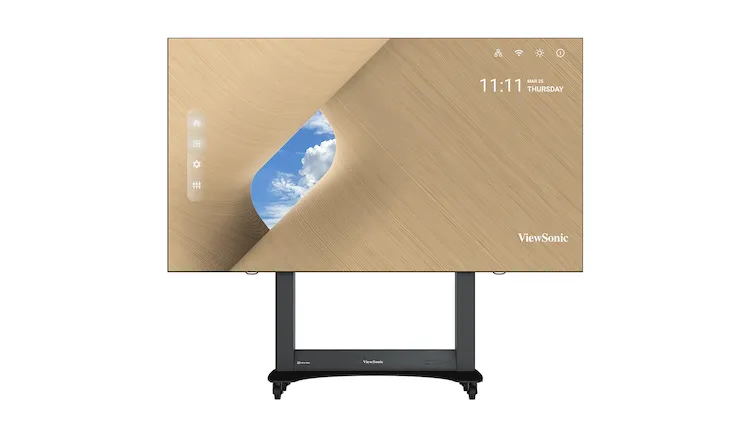
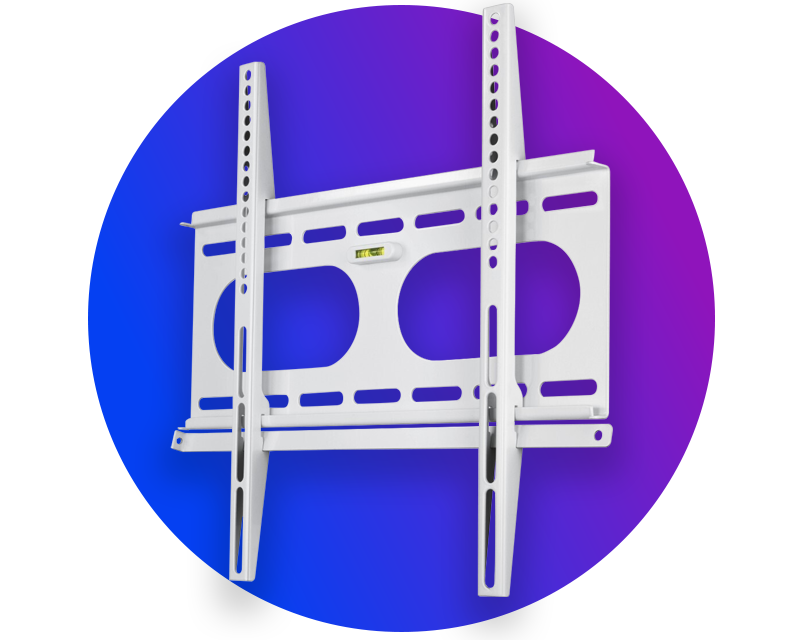
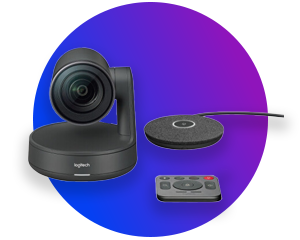
As well as the right displays , we also offer a range of products to help you kit out your meeting room or classroom perfectly: from display mounts and presentation displays and video conferencing systems to modern room furnishings.

Answers to the most common questions about displays

Displays are becoming increasingly important in businesses, educational institutions and public spaces. Their wide range of applications and quick installation make them an attractive alternative to the combination of a projector and a projection screen. Professional displays offer significantly more features than conventional televisions. Furthermore, they are usually brighter and can be used regardless of the lighting conditions in the room.

The resolution should match the screen size and the content displayed. Newer displays usually have a 4K UHD resolution. In some cases, full HD displays are also possible, for example with videowall displays, as the combination of several displays then results in a higher resolution overall. 4K displays ensure that text and image details remain razor-sharp and easy to read, even with larger screen diagonals
With a videowall, several displays are arranged next to each other to create a large overall picture. As a rule, special videowall displays are used for this, as they have several important advantages. On the one hand, these displays have a particularly narrow frame to avoid large black bars between the individual displays. On the other hand, the displays must have the ability to split a single image signal between them. This is possible with daisy chain technology, for example. Additional setting options for colour calibration ensure that all displays can be set to exactly the same brightness and colour temperature.
The two most widely used touch technologies are infrared and capacitive.

  • With infrared technology, a fine, invisible infrared grid is placed over the display. When the finger or a stylus breaks through the grid, the position is recognised. This technology is inexpensive, robust and responds to inputs with fingers, even with gloves, as well as with any pen. It is therefore used in many displays, but is less precise than capacitive technologies.
  • With capacitive displays, similar to a smartphone, an electric field is disturbedby the touch of your finger (or a special pen). This technology is very precise and responsive, but also more expensive. As a rule, it only works with special pens in addition to your finger
The required brightness of the displays depends heavily on the application and the installation location. As a rule of thumb, if the display is to be used in direct sunlight or outdoors, at least 700 cd/m² is required, although a higher brightness is recommended for better recognisability.

When used in rooms with artificial lighting but without direct sunlight, 500 cd/m² is often sufficient . If the lighting conditions in the room can be regulated and the light dimmed as required, 350-450 cd/m² is sufficient
Displays are often rated according to their operating time (e.g. 16/7 or 24/7). The reason for this lies in the components used: displays for 24-hour use are equipped with particularly durable materials. These include, for example, power supply units that can withstand the high continuous load. In addition, fans or passive heat sinks are installed to regulate the heat. The panels are also more resistant to static images (e.g. a company logo) that are permanently displayed. Overall , displays are better able to withstand the high loads caused by massive heat build-up in the device.
A display should always be operated within the specified operating time. Otherwise, irreparable damage to the device may occur, which is not covered by the warranty
When selecting a display mount, you should consider the size and weight of your display. Check the VESA mounting points and make sure they are compatible with your display. Most mounts can accommodate different VESA hole patterns and are therefore compatible with various displays. It is also important that the weight of the display, including accessories, does not exceed the maximum load capacity of the mount. Also consider where you want to mount the display: on the wall, on the ceiling or on a trolley. In the case of wall or ceiling mounting, these must be able to bear a corresponding load. A trolley is particularly interesting for flexible use of the displays.
Special multi-brackets can be used for videowalls, which can hold several displays at the same time. You can find the right mount for your display at visunext
When choosing the signage software or content management software (CMS), it must be clarified whether it runs directly on the display (system-on-chip; SoC) or requires an external player. Other important factors include user-friendliness when creating content, possible integration into calendar systems such as Microsoft 365 for room bookings and the decision as to whether flexible cloud management or a local on-premise solution on your own server is preferred.
Exactly which connections should be considered when buying a display depends very much on your specific requirements and where the display will be used. As a rule, displays should have connections such as HDMI and/or Displayport for video and audio, LAN for networking and remote maintenance and USB for connecting peripheral devices. USB-B for touch transmission and USB-C for the combined transmission of image, sound, data and power are particularly useful for meeting and classroom displays
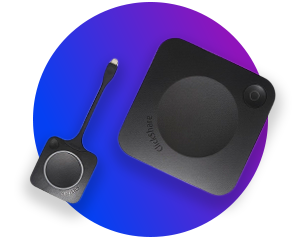
To avoid tangled cables on the conference table, there are various common methods that can be used to supply displays with content wirelessly. One option is integrated consumer standards such as Miracast (for Windows/Android) or AirPlay (for Apple). However, these can sometimes be unreliable in corporate networks in terms of security and bandwidth. The most robust and simplest method is therefore to use professional presentation systems. Such systems, such as Barco ClickShare or Kindermann Klick&Show, use a transmitter that is plugged into the laptop and a receiver on the display. In addition, some presentation systems can also be connected to video conferencing technology such as cameras, microphones and speakers so that you can access these devices from your laptop.

visunext Contact persons

Do you have any further questions about buying a display?

We’d be happy to consult with you personally by phone or email! If you’d prefer us to call you back free of charge, simply leave your contact details.
Loading...
Upload in progress, please be patient ...